We may earn a commission from qualifying purchases at no extra cost to you.

Quick Answer
how to choose ping pong paddle grip comes down to three things: grip style (shakehand or penhold), handle size that fits your hand comfortably, and handle material or texture that stays secure when your hands sweat. Most players do best with a shakehand grip and a smooth, moderately tacky handle and if your current paddle’s grip feels worn or slippery, an overgrip like the GAMMA Supreme Overgrip can restore that feel without buying a new paddle.
Why Grip Actually Matters More Than People Think
It’s easy to focus entirely on blade material, sponge thickness, or rubber type when picking a paddle, but grip is what actually connects your hand to every shot you take. A grip that’s too thick, too slippery, or the wrong shape can throw off your control even with an otherwise excellent paddle.
Learning how to choose ping pong paddle grip isn’t about finding one universal “best” option it’s about matching grip style, size, and texture to how your hand naturally holds the paddle during play.
The Two Main Grip Styles
Shakehand Grip
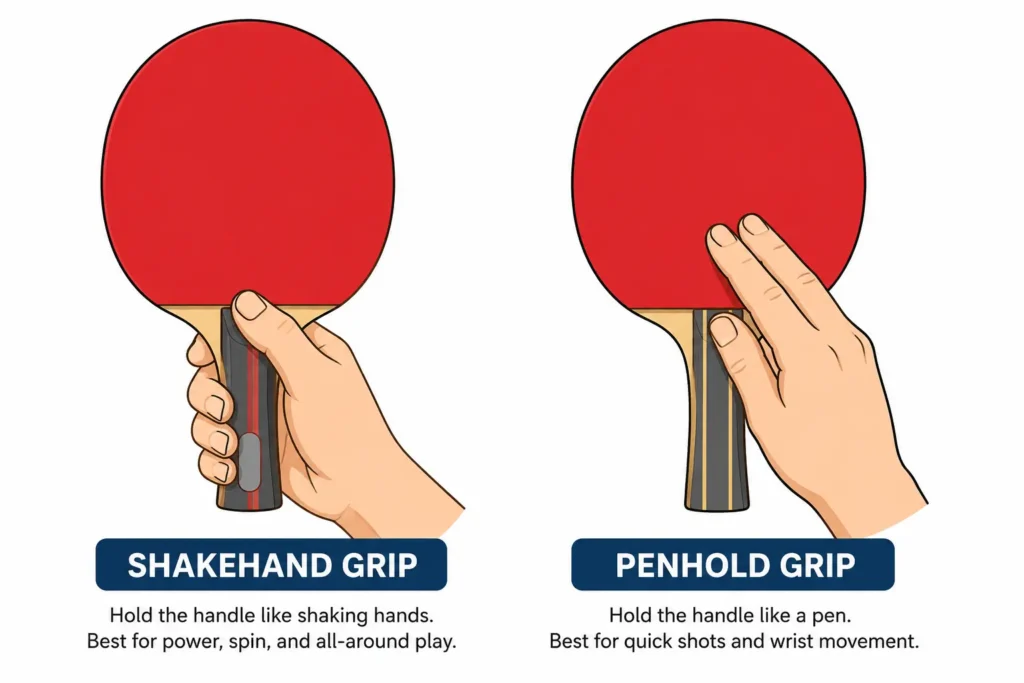
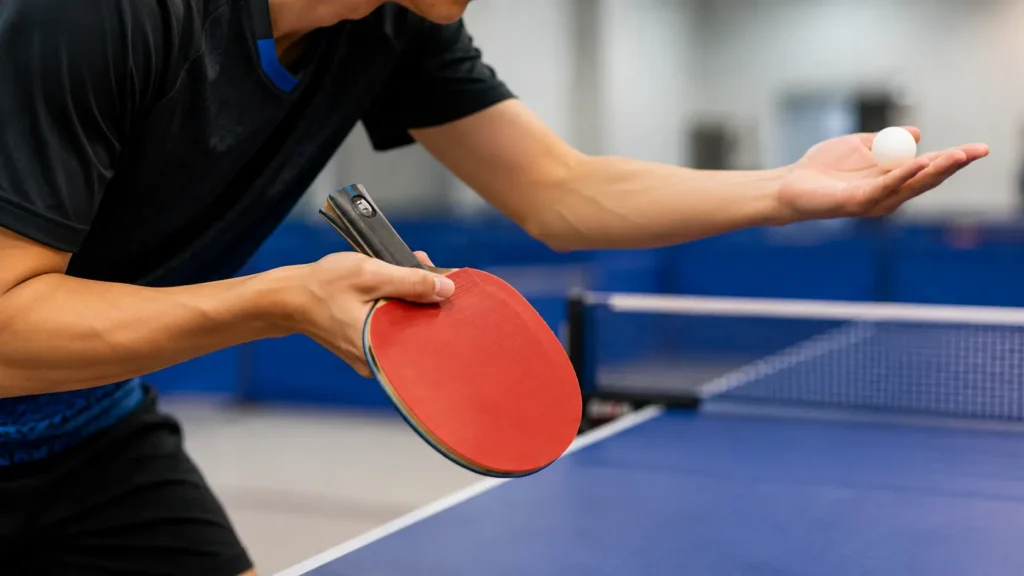
The shakehand grip is the most common style, especially outside of parts of Asia where penholder remains popular. You hold the handle the way you’d shake someone’s hand palm around the handle, fingers wrapping naturally. This grip supports both forehand and backhand shots without needing to switch hand position, which is a big reason it’s typically recommended for beginners.
Penhold Grip
The penhold grip involves holding the paddle more like a pen, with the handle pinched between the thumb and index finger, and the remaining fingers curled against the back of the blade. This style is more common in East Asian playing traditions and tends to favor a more forehand-dominant playstyle, since backhand shots require a different technique than with a shakehand grip.
Neither grip style is objectively better it depends on personal comfort and the playstyle you want to build. Most modern paddles, including beginner sets, are designed around the shakehand grip by default.
What Actually Makes a Grip Comfortable and Secure
Once you know your grip style, the next question in how to choose ping pong paddle grip is what makes the handle itself feel right in your hand. Here’s what matters:
- Handle shape: Flared handles (wider at the base) tend to lock the hand in place naturally; straight handles offer more flexibility in hand position.
- Handle size: A handle that’s too thin or too thick relative to your hand size makes it harder to maintain a consistent grip through fast rallies.
- Surface texture: A smooth, well-sanded handle prevents blisters, while a slightly tacky surface helps prevent slipping during intense play.
- Sweat resistance: Hands sweat during long matches, and a grip that gets slick when damp will cost you control exactly when you need it most.
- Grip maintenance: Handles wear down over time. A grip that’s lost its texture can be restored with an overgrip rather than replacing the whole paddle.
That last point is where a product like an over grip becomes genuinely useful even a great paddle can develop a worn, slippery handle after enough use.
GAMMA Supreme Over grip A Grip Upgrade Worth Knowing About
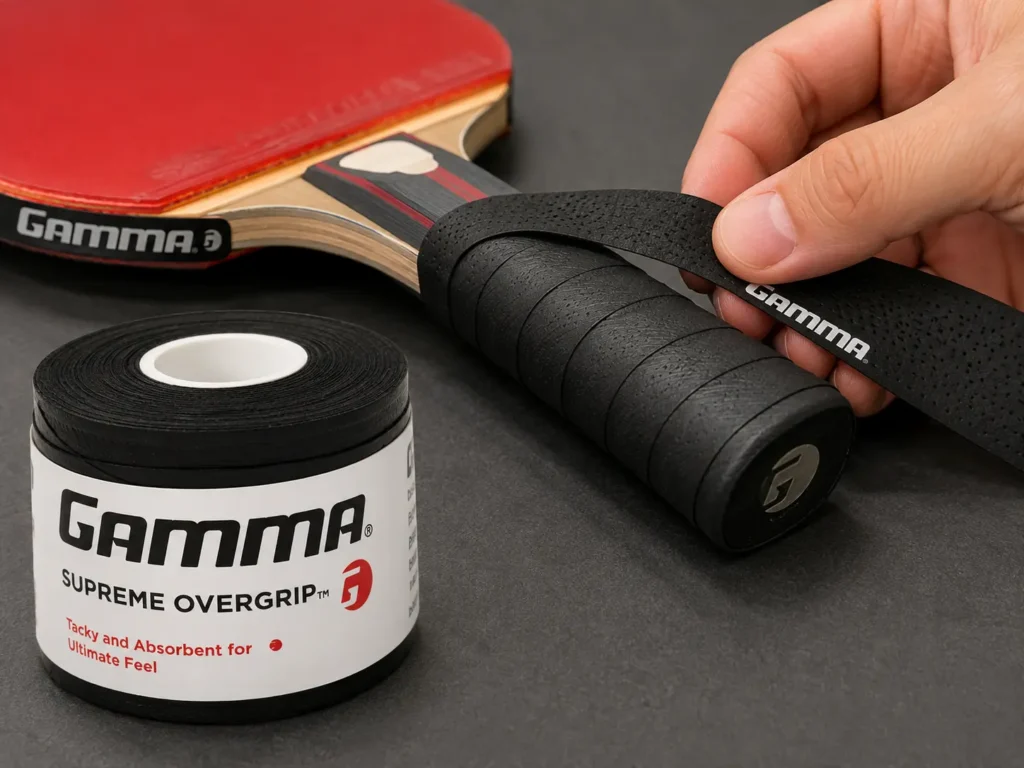
Worth being upfront about: the GAMMA Supreme Overgrip is designed and marketed for tennis, pickleball, squash, badminton, and racquetball racquets not specifically for table tennis paddles. That said, when you’re figuring out how to choose ping pong paddle grip that actually feels secure, overgrip tape is a genuinely universal accessory, and many table tennis players use racquet overgrips like this one to refresh a worn paddle handle.
The tape itself is built from soft, absorbent material designed to stay tacky and durable through extended play, specifically to keep hands dry and comfortable as sweat builds up during a match. Application is quick and tool-free you simply wrap it around the existing handle and it’s sold in multiple pack sizes, from a 3-pack up to a 60-pack jar, so you can restock as needed.
| Spec | Detail |
|---|---|
| Material | Absorbent grip-tape wrap |
| Pack Sizes | 3 / 15 / 30 / 60 |
Key Features:
- Soft, absorbent overgrip tape designed for durability
- Quick, tool-free wrap-on application
- Available in multiple colors and pack sizes
- Originally designed for tennis, pickleball, squash, badminton, and racquetball racquets
Pros:
- Genuinely effective at restoring tackiness to a worn-out handle
- Fast application without needing to replace the whole paddle
- Sweat-absorbent material helps maintain grip through long sessions
Cons:
- Not specifically marketed or tested for table tennis paddle handles, so results may vary depending on your paddle’s handle shape
- Designed primarily for longer racquet handles, so you may need to trim excess for a shorter paddle grip
Verdict: If your paddle’s original grip has worn smooth or slippery, an over grip like GAMMA’s is a low-cost way to restore that tacky, secure feel — just know it’s a racquet-sport product being repurposed, not a table-tennis-specific one.
As an Amazon Associate, we earn from qualifying purchases.
How to Actually Choose the Right Grip for You
Start with grip style: if you’re newer to the sport, a shakehand grip on a standard paddle handle is the easier, more versatile starting point. From there, pay attention to how the handle feels in your hand during play does it feel secure, or does your grip shift during fast exchanges?
If the answer is that your grip feels unstable specifically because the handle surface has worn down, that’s a texture problem you can likely fix with an over grip rather than a full paddle replacement. If the handle shape itself feels wrong for your hand too thin, too thick, or the wrong flare that’s more likely a paddle-fit issue that an over grip won’t solve.
Why Trust This Guide
Every recommendation on this page for how to choose ping pong paddle grip is based on real, widely-recognized table tennis grip principles and the actual specs of the featured product, pulled directly from its listing. We’re upfront about where a product’s stated use case does or doesn’t line up perfectly with table tennis, rather than overselling it.
Buying Guide: How to Choose Ping Pong Paddle Grip
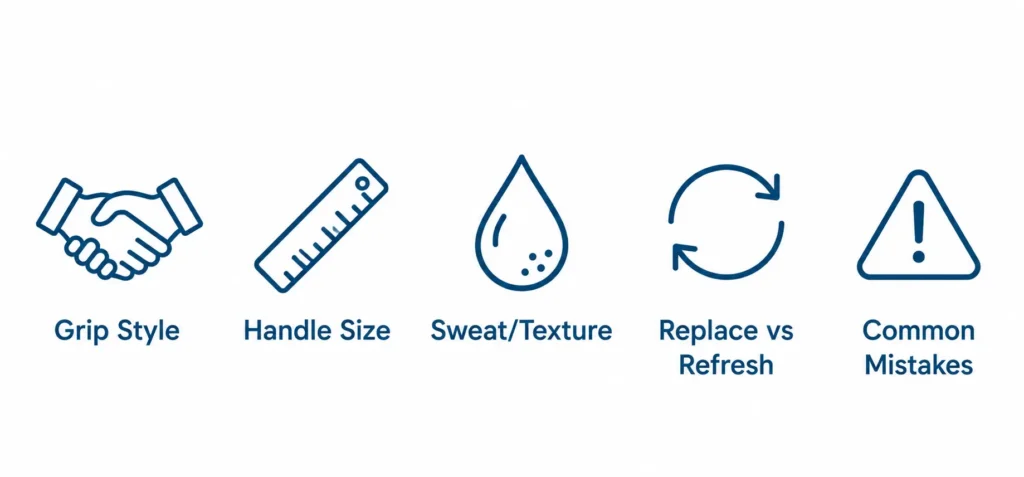
Match Your Grip Style First
The first step in how to choose ping pong paddle grip is deciding between shakehand and penhold, before worrying about texture or material. Most beginners do better starting with shakehand, since it supports both forehand and backhand naturally.
Test Handle Size Against Your Hand
A handle that’s noticeably too thin or thick for your hand size will be harder to control consistently, regardless of how good the texture is.
Prioritize Texture If You Sweat Heavily
If your hands sweat during play, a tacky, absorbent grip surface or an added over grip matters more than almost any other spec on the paddle.
Know When to Replace vs Refresh
A worn handle doesn’t always mean you need a new paddle. If the underlying blade and rubber are still good, an overgrip can restore the feel of a fresh handle at a fraction of the cost.
Check Product Fit Before Buying Accessories
Not every grip accessory is designed specifically for table tennis paddles. Products built for tennis or other racquet sports, like overgrip tape, can often be adapted, but it’s worth checking handle length and shape compatibility first.
Common Mistakes Buyers Make
The most common mistake is assuming grip problems are always a paddle problem. Often, a slipping or uncomfortable grip is a texture issue that a simple overgrip can fix, without needing to replace the entire paddle.
Final Verdict
Learning how to choose ping pong paddle grip starts with grip style shakehand for most players then comes down to handle size, texture, and sweat resistance. If your paddle’s grip has simply worn down rather than being the wrong shape for your hand, the GAMMA Supreme Overgrip is a practical, low-cost way to restore that secure feel, even though it’s designed primarily for other racquet sports.
As an Amazon Associate, we earn from qualifying purchases.
Frequently Asked Questions
How do I choose a ping pong paddle grip?
Choosing a ping pong paddle grip starts with deciding between a shakehand or penhold style, then matching handle size to your hand and prioritizing texture if you sweat heavily during play. Most players do best starting with a shakehand grip.
What is the difference between shakehand and penhold grip?
Shakehand grip involves holding the paddle like a handshake, supporting both forehand and backhand naturally, while penhold grip pinches the handle between the thumb and index finger, favoring a more forehand-dominant style.
Can I use a tennis overgrip on a ping pong paddle?
Many players do, even though overgrips like GAMMA’s Supreme Overgrip are designed for tennis, pickleball, squash, badminton, and racquetball. The wrapping technique works similarly, though results can vary depending on your paddle’s handle length and shape.
How do I know if my paddle grip needs replacing?
If your grip feels slippery or worn smooth despite good technique, that’s usually a texture problem you can fix with an overgrip rather than replacing the entire paddle. If the handle shape itself feels wrong for your hand, a different paddle may be needed instead.
Does grip size affect my table tennis performance?
Yes. A handle that’s too thin or thick for your hand can make it harder to maintain a consistent, controlled grip through fast rallies, even if every other part of the paddle is high quality.
How often should I replace or refresh my paddle grip?
It depends on how often you play, but if you notice reduced tackiness or visible wear on the handle, refreshing it with an overgrip is a quick, affordable fix worth trying before buying a new paddle.
Related Reads
- Best Ping Pong Paddles for Beginners
- Offensive vs Defensive Ping Pong Paddles: Which Fits Your Game
- Carbon Fiber vs Wood Ping Pong Paddles Compared