Gameflx is reader-supported. We may earn a commission from qualifying purchases at no extra cost to you.
Quick Answer
Are ABS ping pong balls worth it? Yes for almost every player. They’re the current ITTF-approved standard, more durable and temperature-stable than the old celluloid balls they replaced, and they deliver a more consistent bounce over time. Unless you’re specifically collecting vintage celluloid balls, ABS is the safer, longer-lasting choice — and the PRO-SPIN ABS balls below are a solid example of what a well-made pack looks like.
ABS vs Normal Ping Pong Balls: What’s the Real Difference?
The core difference between ABS and normal (celluloid) ping pong balls comes down to the material they’re made from, and that one change is exactly why people keep asking whether are abs ping pong balls worth it in the first place.
For decades, table tennis balls were made from celluloid, a nitrocellulose-based plastic. Celluloid balls had a lively, slightly softer feel that a lot of older players still remember fondly. The problem was that celluloid is highly flammable it’s the same family of material once used in old film reels which made it a genuine shipping and storage hazard. Airlines restricted it, warehouses had to handle it carefully, and it was sensitive to temperature and humidity, which meant its bounce could vary from one climate to another.
ABS (Acrylonitrile Butadiene Styrene) is the plastic that replaced celluloid as the official ITTF standard. It’s the same durable plastic used in things like LEGO bricks and car interior panels tough, stable, and non-flammable. When manufacturers switched to ABS, they solved the fire-hazard problem entirely, and picked up a few real performance advantages in the process.
Here’s how the two compare directly:
- Durability: ABS balls resist cracking and denting better than celluloid, especially under hard smashes.
- Consistency: ABS holds its shape and bounce more reliably across different temperatures and humidity levels.
- Safety: ABS is non-flammable, which is why it’s now the only material permitted in official ITTF play.
- Feel: Celluloid loyalists sometimes describe it as slightly softer off the paddle; ABS is firmer and, for most players, more predictable.
- Availability: Because ABS is now the official standard, it’s what you’ll find in nearly every modern ball, star-rated or not celluloid balls have become the exception rather than the rule.
If you’re buying ping pong balls today, you’re almost certainly buying ABS, whether the listing calls it out or not. The real question isn’t “ABS or celluloid” anymore it’s whether the ABS ball in front of you is well-made, which is really just another way of asking are ABS ping pong balls worth it for your specific setup.
That’s where a product like PRO-SPIN comes in.If you’re buying ping pong balls today, you’re almost certainly buying ABS, whether the listing calls it out or not. The real question isn’t “ABS or celluloid” anymore it’s whether the ABS ball in front of you is well-made or not. That’s where a product like PRO-SPIN comes in.
PRO-SPIN High-Performance Ping Pong Balls: A Closer Look
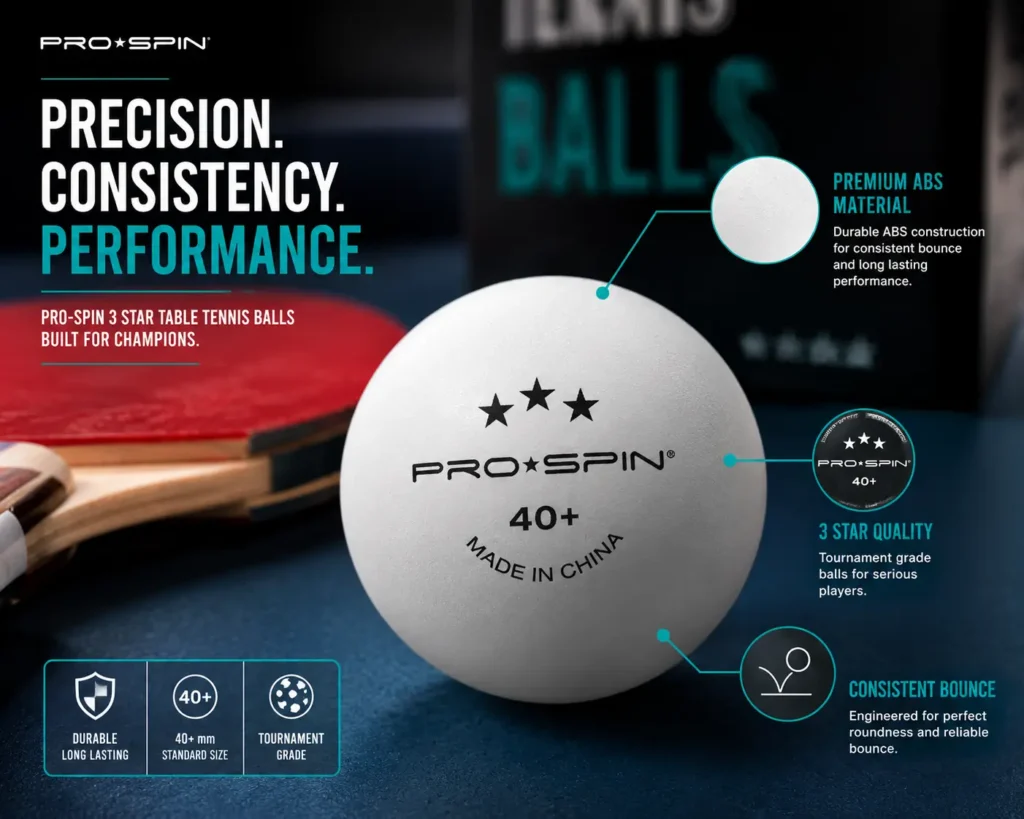
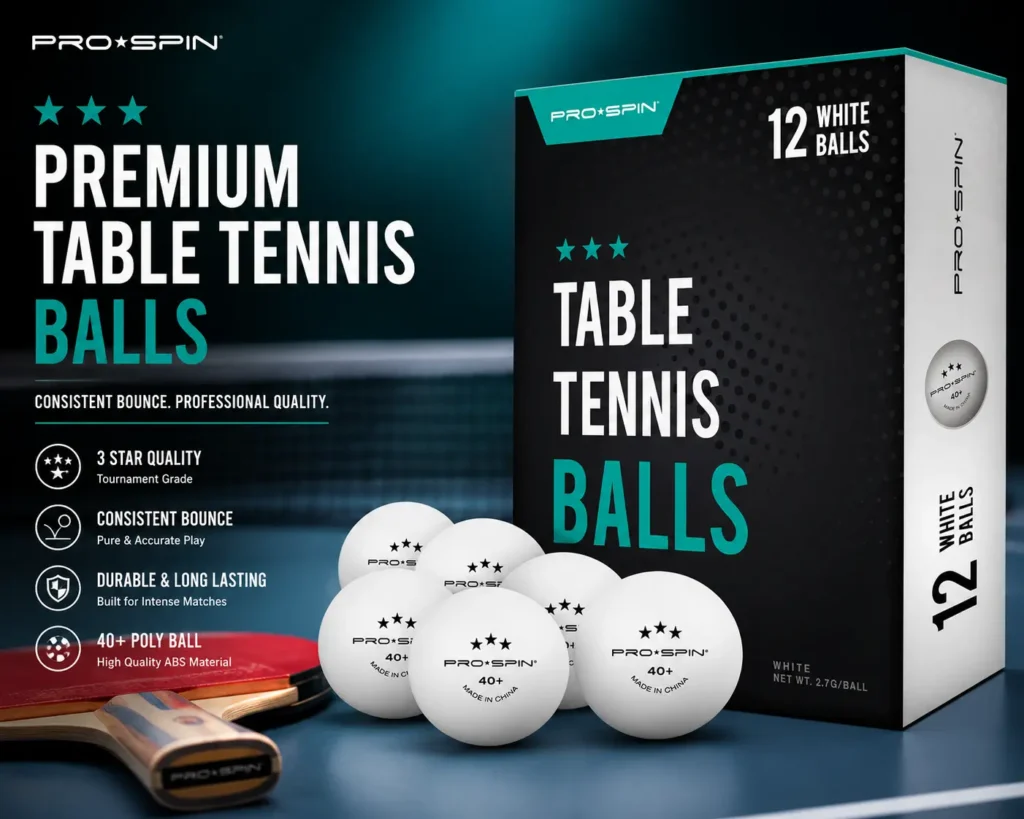
PRO-SPIN’s ABS ping pong balls are a practical example of how far ABS construction has come, and a good real-world test of whether are ABS ping pong balls worth it for everyday players. They’re built from premium ABS plastic, meet official size and weight standards, and are designed to hold up through both competitive rallies and casual family games.
What makes this pack worth a closer look is the flexibility in pack sizing you can start small with a 12-pack to test them out, or go straight to the 60-pack if you’re setting up a home table or small club that goes through balls quickly. PRO-SPIN also backs orders with a replacement guarantee, so a damaged ball on arrival doesn’t mean you’re stuck with it.
Key Features:
- Premium ABS plastic construction, official size and weight standards
- Available in 12, 24, or 60-ball pack sizes
- Rated 3-star for consistent bounce in competitive and casual play
- Suitable for both indoor and outdoor tables
- Backed by a replacement guarantee for damaged arrivals
Pros:
- Reliable, consistent bounce across long rallies a direct benefit of ABS construction
- Multiple pack sizes to match different budgets and needs
- Durable enough to withstand hard smashes without cracking
- Straightforward guarantee if something arrives damaged
Cons:
- The 60-pack offers noticeably better value per ball than the smaller packs
- Since it’s a 3-star ball, it’s built for players who want real performance casual buyers who just want cheap bulk balls may prefer a 1-star pack instead
Verdict: PRO-SPIN’s ABS balls are a dependable, no-surprises option that shows exactly why ABS construction is worth choosing consistent, durable, and built to official standards.
As an Amazon Associate, we earn from qualifying purchases.
So, Are ABS Ping Pong Balls Actually Worth It?
For nearly every player, yes. ABS has replaced celluloid as the official standard for a reason: it’s safer to ship and store, more resistant to cracking, and holds a consistent bounce regardless of the weather in your garage or club.
The only players who might disagree are collectors or purists chasing the specific feel of old celluloid balls and even they’ll admit that finding celluloid balls today is increasingly difficult, since most manufacturers have fully moved to ABS.
If your main goal is a ball that performs the same way every single time you play, ABS construction is what delivers that.
Buying Guide What to Look for When Deciding If ABS Ping Pong Balls Are Worth It
Star Rating
Star rating tells you how strictly the ball’s roundness and bounce were checked. 3-star ABS balls are built for competitive and serious practice play, while 1-star ABS balls are made for casual hitting and bulk training where a little inconsistency doesn’t matter.
Pack Size
Buying in bulk almost always lowers your per-ball cost. If you play often or run a club, a 60-ball pack works out cheaper per unit than a 12-ball pack, even though the upfront cost is higher.
Size and Weight Standards
Official ABS balls should meet the 40+mm size standard and weigh around 2.7 grams. Balls that stray far from this can throw off your spin and bounce, even if the material itself is ABS.
Indoor vs Outdoor Use
Some ABS balls are specifically built to hold up outdoors, where wind and temperature swings are more of a factor. If you’re playing outside regularly, check that the listing mentions outdoor suitability.
Common Mistakes Buyers Make
The biggest mistake is assuming all ABS balls perform the same. Star rating, brand quality control, and pack size all affect how a ball actually plays so when you ask are ABS ping pong balls worth it, remember that “ABS” tells you the material, not the quality.
Final Verdict
ABS ping pong balls are worth it not as a marginal upgrade, but as the current standard the entire sport has moved to. They’re safer to store and ship than celluloid, hold up better under repeated smashes, and keep their bounce consistent no matter the conditions you’re playing in. PRO-SPIN’s ABS balls are a solid, well-rounded example of what a good pack looks like, with pack sizes flexible enough for casual players and serious ones alike.
As an Amazon Associate, we earn from qualifying purchases.
Frequently Asked Questions
Are ABS ping pong balls worth it compared to celluloid?
Yes. ABS ping pong balls are safer, more durable, and more temperature-stable than celluloid, which is why they’ve replaced celluloid as the official ITTF standard. Celluloid balls are now the exception rather than the rule.
What does ABS mean on a ping pong ball listing?
ABS stands for Acrylonitrile Butadiene Styrene, a durable, non-flammable plastic that has become the standard material for modern table tennis balls.
Do ABS balls bounce differently than celluloid balls?
ABS balls tend to feel slightly firmer than celluloid, with a more consistent bounce across different temperatures and humidity levels. Some players who grew up on celluloid notice the difference at first, but adjust quickly.
Can ABS ping pong balls be used outdoors?
Many ABS balls can be used outdoors, especially those specifically labeled for indoor and outdoor play, since ABS holds up better to temperature changes than celluloid does.
Is a higher star rating always better for ABS balls?
Not necessarily. A 3-star ABS ball is better for competitive play and serious practice, but a 1-star ABS ball is often the smarter, cheaper choice for casual games, kids, or bulk multiball training.
Related Reads
- Bulk Ping Pong Balls for Clubs and Schools
- 3-Star vs 1-Star Ping Pong Balls What’s the Real Difference