We may earn a commission from qualifying purchases at no extra cost to you.

Quick Answer
Carbon fiber vs wood ping pong paddle comes down to a tradeoff between stability and feel. The PRO-SPIN Carbon Paddle Set uses a 7-ply blade with 2 layers of carbon fiber for a stiffer, more stable response built for competitive control. The STIGA Performance Set uses a pure 5-ply wood blade with published performance ratings (Speed 38, Spin 39, Control 53), delivering the classic, more flexible feel wood players tend to prefer.
Carbon Fiber vs Wood Ping Pong Paddles: What’s the Real Difference?
The core difference between carbon fiber and wood ping pong paddles comes down to how the blade responds to contact with the ball, and that difference shapes almost everything about how a paddle feels in play.
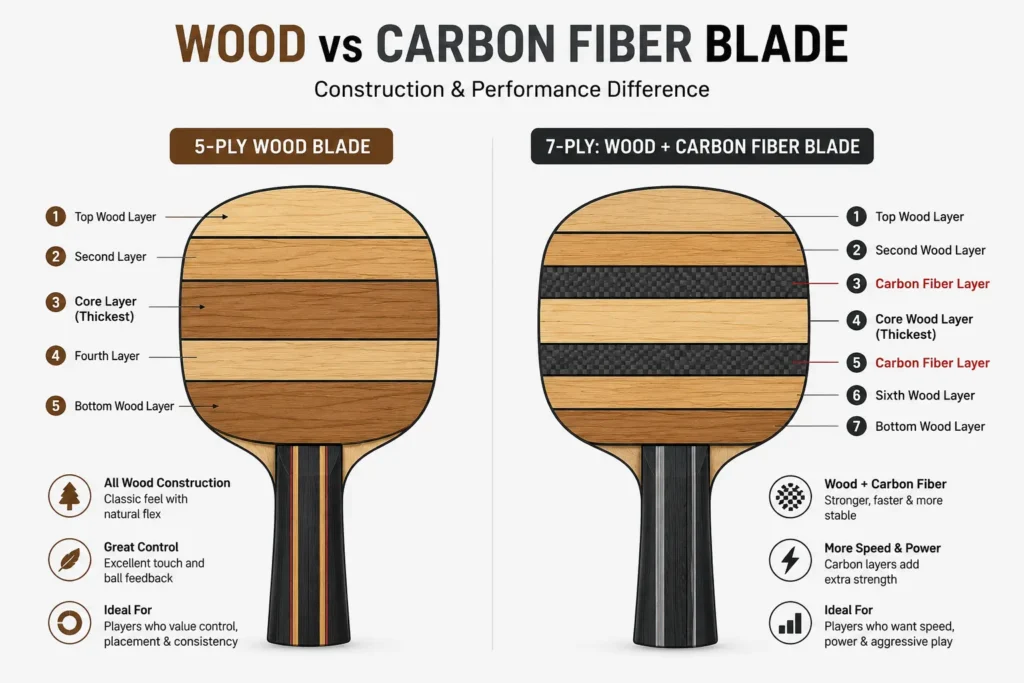
Wood paddles use layered wood construction often 5-ply, alternating grain direction between layers for strength to create a blade that flexes slightly on contact. That flex is exactly what gives wood paddles their classic “feel”: a softer, more responsive sensation that many players associate with traditional table tennis, along with a natural, predictable bounce.
Carbon fiber paddles add one or more layers of carbon fiber into the blade construction, typically alongside wood layers rather than replacing them entirely. Carbon fiber is significantly stiffer than wood, which reduces blade flex and vibration on contact. That added stiffness translates to more stability and a larger, more forgiving sweet spot useful for players who want consistent shot placement even when contact isn’t perfectly centered.
Here’s how the two typically compare:
- Blade stiffness: Wood blades flex more on contact; carbon fiber layers add stiffness and reduce vibration.
- Feel: Wood paddles are often described as having a softer, more traditional feel; carbon paddles feel firmer and more stable.
- Sweet spot: Carbon fiber construction, like PRO-SPIN’s, is often specifically built to expand the sweet spot for more consistent contact.
- Skill level fit: Wood paddles are frequently marketed toward amateur and developing players, while carbon fiber paddles tend to target intermediate and competitive players chasing more precision.
- Construction complexity: Wood paddles use a simpler layered wood blade, while carbon paddles combine wood layers with carbon fiber sheets for a hybrid construction.
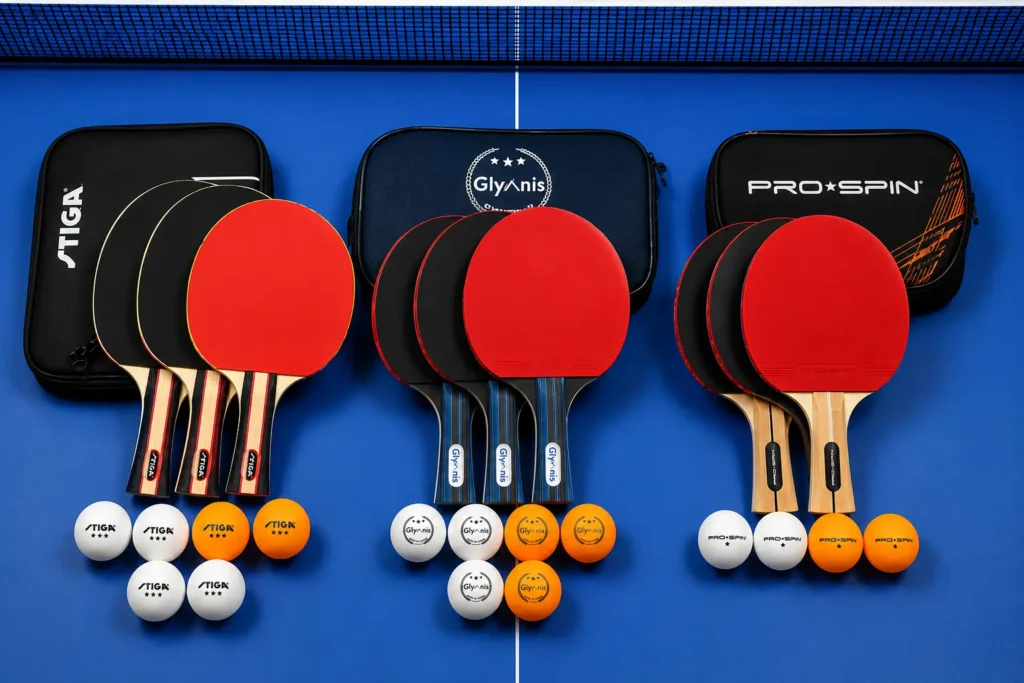
Neither material is universally “better” it depends on whether you value the traditional flex of wood or the added stability carbon fiber brings to your shots. That’s exactly what the two paddle sets below demonstrate.
1. PRO-SPIN Ping Pong Paddle Set Carbon Fiber Pick
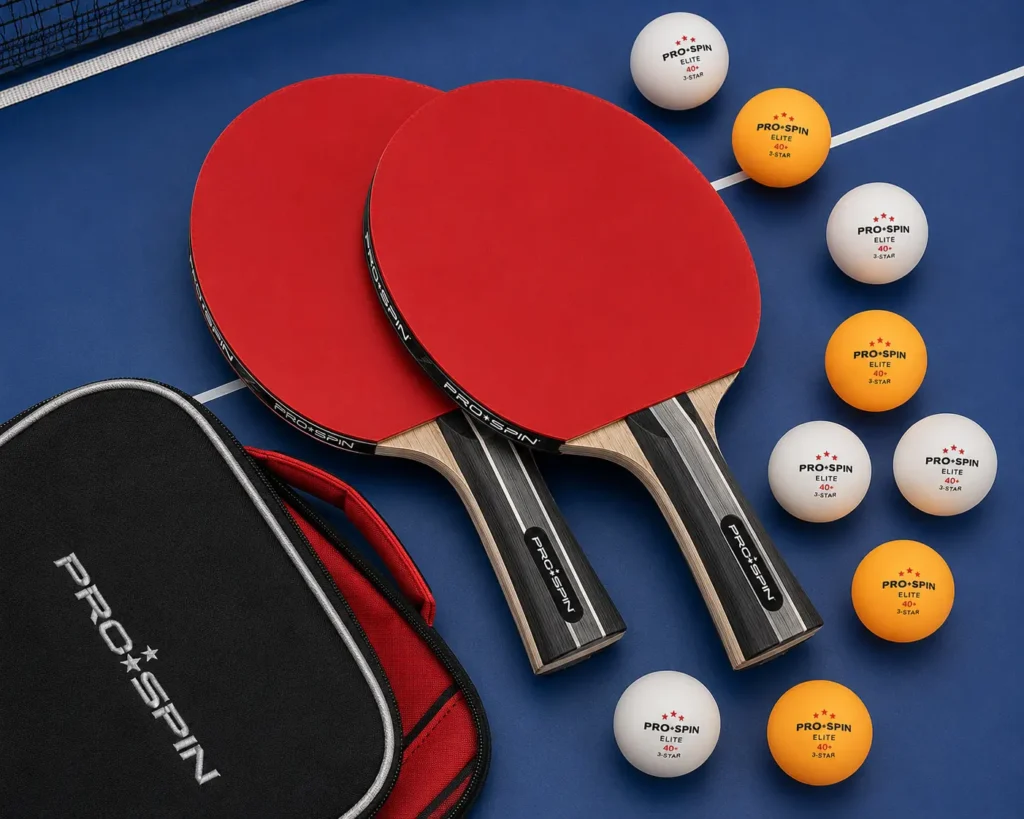
The PRO-SPIN Ping Pong Paddle Set is a clear example of what carbon fiber brings to a paddle’s construction. The blade uses a 7-ply build 5 layers of premium wood (silver walnut and ayous) combined with 2 layers of carbon fiber designed specifically for stability and consistent shot placement rather than raw wood flex.
The rubber is ITTF-approved, meeting professional-grade certification standards, and paired with a 2.0mm sponge tuned for spin and control. Every paddle includes a Concave Pro handle with an inner carbon tube, which further reduces vibration and adds to the stable, confident feel PRO-SPIN is aiming for. This is a complete competition set: four paddles, eight durable 3-star balls for consistent bounce, and a protective case, built for players who want everything ready for high-level play out of the box. It’s rated for intermediate skill level, positioning it above a basic starter paddle but accessible before advanced tournament-grade equipment.
| Spec | Detail |
|---|---|
| Blade Construction | 7-ply: 5 wood + 2 carbon fiber |
| Skill Level | Intermediate |
Key Features:
- 7-ply blade: 5 layers premium wood + 2 layers carbon fiber
- 2.0mm sponge tuned for spin and control
- ITTF-approved, professional-grade certified rubber
- Concave Pro handle with inner carbon tube to reduce vibration
- Complete set: 4 paddles, 8 3-star balls, protective case
Pros:
- Genuine carbon fiber construction built for stability, not just marketing language
- Expanded sweet spot helps with consistent shot placement
- Complete competition-ready set nothing extra to buy separately
Cons:
- Intermediate skill-level positioning means true beginners may find it less forgiving than a simple wood paddle
- The added carbon construction gives it a firmer, less traditional feel than a classic wood blade
Verdict: For players who want the added stability and consistency carbon fiber brings to a blade, the PRO-SPIN set delivers a genuinely well-built, complete competition package.
As an Amazon Associate, we earn from qualifying purchases.
2. STIGA Performance Set Wood Pick
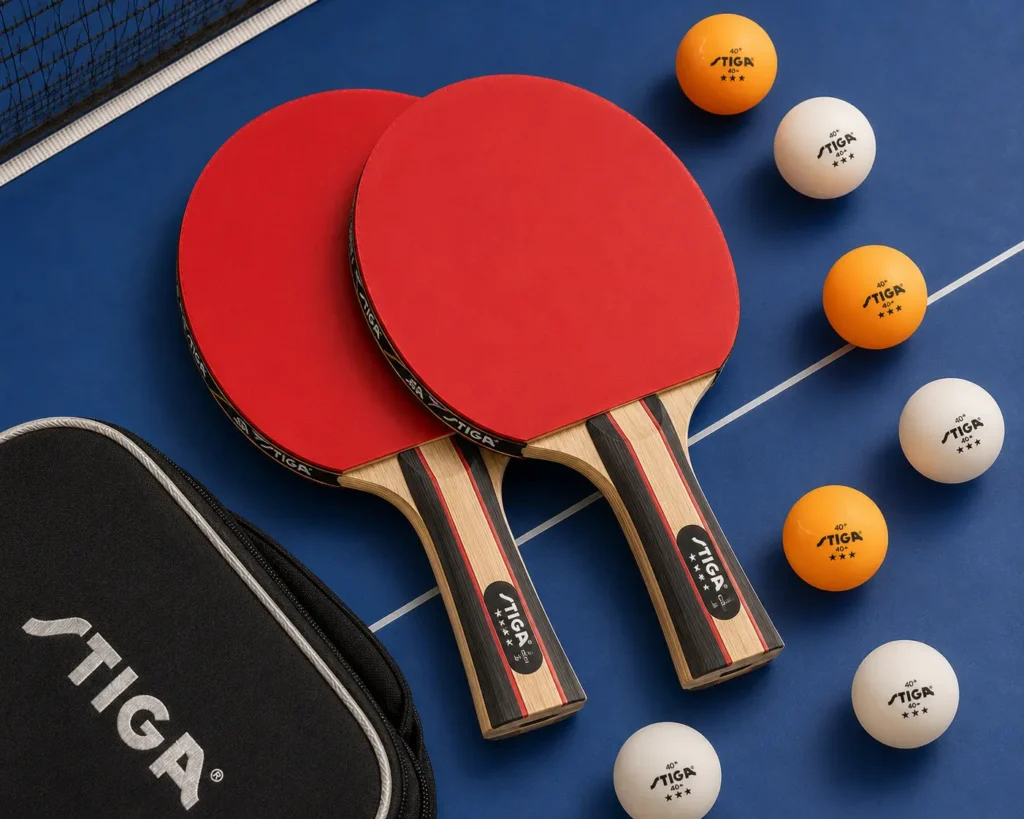
Where PRO-SPIN leans into carbon fiber stability, the STIGA Performance Set represents the classic wood-paddle approach and it comes from a brand with the heritage to back it up. STIGA has been an innovative leader in table tennis equipment since 1944.
The set is USATT approved and built around a 5-ply wood blade with a flared handle and 1.5mm sponge, using premium, smooth inverted rubber for control and added spin. It includes four performance rackets and six orange/white 3-star ITTF regulation-size (40mm) balls, positioned specifically for amateur players looking to challenge friends and build real table tennis skill. STIGA also publishes performance ratings for this racket Speed 38, Spin 39, Control 53 which places it firmly on the control-focused end of the spectrum, well suited to players still developing consistent technique.
| Spec | Detail |
|---|---|
| Blade Construction | 5-ply wood |
| Performance Ratings | Speed 38 / Spin 39 / Control 53 |
Key Features:
- 5-ply pure wood blade with flared handle
- 1.5mm sponge with smooth inverted rubber
- USATT approved, includes 3-star ITTF regulation-size balls
- Published performance ratings: Speed 38 / Spin 39 / Control 53
- Built by a brand with 80+ years of table tennis heritage
Pros:
- Classic wood feel that many players find more natural and forgiving to learn on
- Published, transparent performance ratings make it easy to know exactly what you’re getting
- USATT approval backs up its credibility for skill-building and amateur competition
Cons:
- Lower raw stability than a carbon-reinforced blade when contact isn’t perfectly centered
- Control-focused ratings mean less explosive power compared to a carbon fiber build
Verdict: For players who want the traditional wood feel and a transparent, control-focused performance profile, the STIGA Performance Set is a well-built, amateur-friendly choice.
As an Amazon Associate, we earn from qualifying purchases.
Carbon Fiber vs Wood Ping Pong Paddle Which Should You Actually Buy?
If you’re chasing more stability, a larger forgiving sweet spot, and consistent shot placement especially as your game gets more competitive the PRO-SPIN Carbon Fiber Set is built specifically around that goal. Its 7-ply hybrid construction is designed to reduce vibration and keep your shots consistent even when contact isn’t perfect.
If you prefer the traditional, slightly softer feel of wood, and you want transparent performance ratings to know exactly what you’re working with, the STIGA Performance Set’s pure 5-ply wood blade delivers that classic experience while still being built to a real competitive standard.
The honest answer to carbon fiber vs wood ping pong paddle isn’t about one material being objectively superior it’s about which feel and stability profile actually matches how you play.
Why Trust This List
Every pick on this page is evaluated against the same core criteria: blade construction, published performance data where available, skill-level fit, and overall value as a complete set. We only include real, verifiable product specs no invented dimensions or made-up performance claims.
Buying Guide: Choosing Between Carbon Fiber and Wood Paddles
Know Your Skill Level First
Wood paddles are often more forgiving for developing players still building consistent technique, while carbon fiber paddles, like PRO-SPIN’s intermediate-rated set, reward players who already have reasonably consistent contact.
Blade Feel and Flex
If you’ve played before and have a preference for a softer, more traditional feel, pure wood construction will likely feel more natural than the firmer response of a carbon-reinforced blade.
Sweet Spot and Forgiveness
Carbon fiber layers are frequently engineered specifically to expand the sweet spot, which can help reduce the impact of slightly off-center contact during fast rallies.
Performance Transparency
Some paddles, like the STIGA Performance Set, publish specific performance ratings for speed, spin, and control, which makes it easier to compare paddles on paper rather than guessing from marketing copy alone.
Common Mistakes Buyers Make
The most common mistake is assuming carbon fiber is automatically “better” because it sounds more advanced. The right material depends entirely on your playstyle and skill level a wood paddle in the right hands can outperform a carbon paddle used inconsistently.
Final Verdict
Choosing between carbon fiber vs wood ping pong paddles comes down to matching blade construction to how you actually play, not chasing whichever material sounds more advanced. The PRO-SPIN Carbon Fiber Set is the stronger pick for players who want added stability and a bigger sweet spot as their game gets more competitive. The STIGA Performance Set is the better fit for players who prefer the classic wood feel and transparent, control-focused performance data.
Frequently Asked Questions
What is the difference between carbon fiber and wood ping pong paddles?
Carbon fiber ping pong paddles add layers of carbon fiber alongside wood in the blade, increasing stiffness and stability, while pure wood paddles rely on layered wood construction alone for a softer, more traditional flex and feel.
Are carbon fiber paddles better than wood paddles?
Not universally. Carbon fiber paddles tend to offer more stability and a larger sweet spot, which suits intermediate and competitive players, while wood paddles offer a more forgiving, traditional feel that many developing players prefer.
Do carbon fiber paddles increase speed and power?
Carbon fiber generally reduces blade flex and vibration, which contributes to more consistent shot placement. Speed and power still depend heavily on the specific sponge, rubber, and overall paddle construction, not the material alone.
Which paddle material is better for beginners?
Wood paddles are often recommended for players still developing consistent technique, since the softer flex tends to feel more forgiving than the stiffer response of a carbon fiber blade.
How many carbon fiber layers does a typical paddle use?
It varies by paddle. The PRO-SPIN set, for example, uses a 7-ply blade combining 5 layers of premium wood with 2 layers of carbon fiber for a hybrid construction rather than a fully carbon blade.
What do paddle performance ratings like Speed, Spin, and Control actually mean?
These ratings, published by some manufacturers like STIGA, give a relative comparison of how a racket performs across three categories, helping buyers understand whether a paddle leans toward power, spin, or control-focused play.
Related Reads
- Best Ping Pong Paddles for Beginners
- Offensive vs Defensive Ping Pong Paddles: Which Fits Your Game
- Best Ping Pong Paddles Full Buying Guide